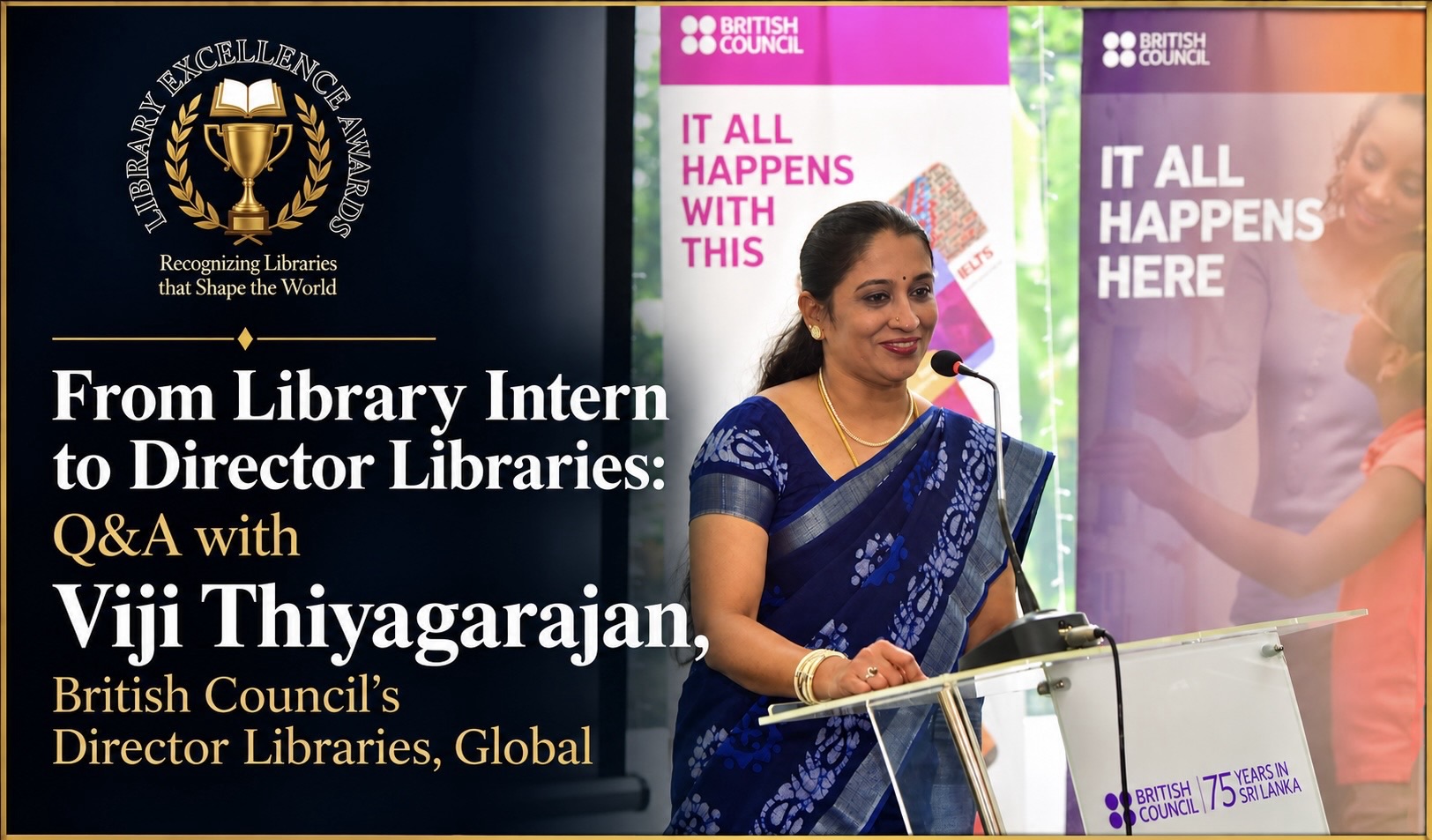
From Library Intern to Director Libraries: Q&A with Viji Thiyagarajan, British Council’s Director Libraries, Global
Journalism: Alaa Mohamed
Publisher: Dr. Mahmoud Mansi
“I see the librarian’s role evolving from being a provider of information to a navigator of information, helping people ask better questions, evaluate sources, identify bias, verify information, and use AI responsibly… AI can provide information, but libraries help transform information into knowledge, knowledge into understanding, and understanding into meaningful action.”
— Viji Thiyagarajan
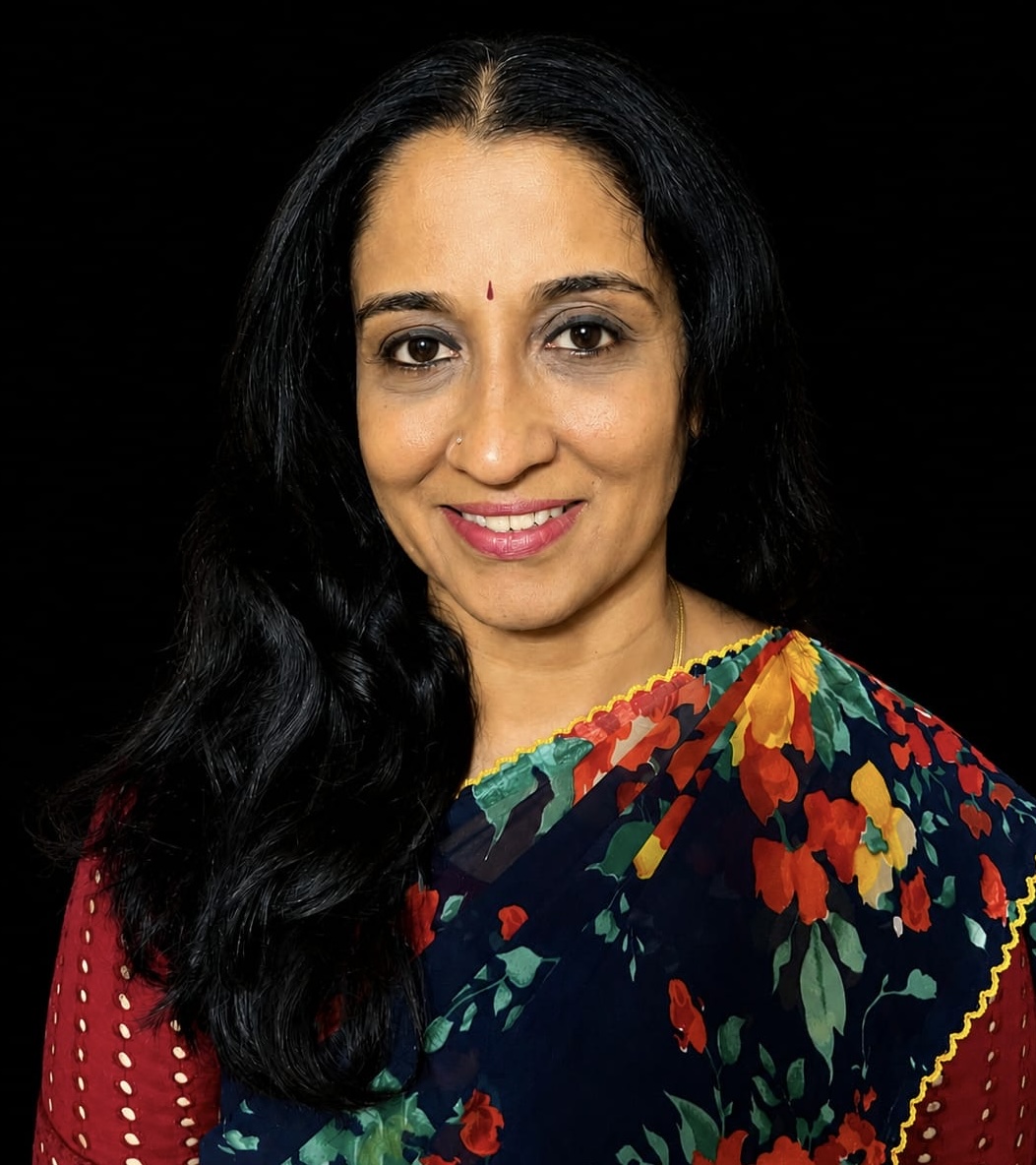
What began in 1998 as Viji Thiyagarajan’s first job—a Library Intern at the British Council in Chennai—grew into a remarkable international leadership journey. After building experience across libraries, customer service, knowledge management, business development, examinations, and EDI, she returned to the library world with a much broader perspective on how institutions can serve and engage their audiences.
Today, as Director Libraries, Global at the British Council, Viji helps shape an evolving library ecosystem that combines physical spaces with digital access, connecting readers and learners across countries. For her, however, the future of libraries is not defined by technology alone, but by access, relevance, trust, learning, and human connection.
In this exclusive Library Excellence Awards (LEA) interview, Viji reflects on her journey from intern to global director and explores hybrid libraries, AI, cultural exchange, children and reading, leadership, library excellence, and the role of the librarian in 2035.
LEA: Moving from being an intern at the British Council to leading the library strategy across physical libraries in South and East Asia, and then globally, while supporting digital libraries in over 35 countries, is an incredible journey that deserves not only to be told, but to be taught. Such a major transition must have been shaped by unique experiences. Looking back, what would you say were the defining experiences that contributed the most to this transformation?
Viji Thiyagarajan: My career has been shaped by continuous learning, embracing challenges, and stepping beyond my comfort zone.
I started as a Library Intern at the British Council, managing collections, supporting operations, and serving library users. That experience taught me a lesson that has guided me throughout my career: success begins with understanding your audience.
Over time, I had opportunities to work across Customer Service, Knowledge Management, EDI (Equality, Diversity, and Inclusion) Wing, Business Development, and Exams Operations. These roles broadened my perspective and helped me develop skills in customer engagement, partnerships, operational excellence, and leading diverse teams. When I returned to libraries in a leadership role, those experiences proved invaluable.
Leading libraries through digital transformation was another defining experience. As libraries evolved into hybrid knowledge environments, I learned that successful transformation is not just about technology but about people, mindset, and purpose.
Working across multiple countries also taught me the importance of adapting to local contexts while maintaining a shared strategic vision. I learned to focus on possibilities rather than limitations, finding new ways to extend the reach and impact of libraries through digital innovation and partnerships.
Looking back, I have learned that careers are rarely linear. Being an intern was not a limitation but a foundation. Every role, challenge, success, and setback contributed to the leader I am today. The greatest transformation has been moving from managing a library to reimagining what a library can become.
LEA: Can we travel back with you in time and take us to the younger ambitious version of Viji, on the very first day you stepped inside Chennai’s British Council Library in 1998 as an intern. What happened on that day, what did you feel, and how was the experience?
Viji Thiyagarajan: When I joined the British Council as a Library Intern, fresh out of university, it was my first job. The library felt like a place of endless possibilities, where people came to learn, discover, and grow.
As an intern, I learned that every customer interaction mattered. Listening, understanding needs, and responding effectively became lessons that shaped my entire career.
Although I later moved into customer service, business development, exams, and leadership roles, the library remained my foundation. Those experiences broadened my perspective and strengthened my leadership capabilities.
Looking back, what seemed like the start of an internship was the beginning of a remarkable professional journey. Little did I know that it would one day lead me from managing libraries to reimagining their future.
LEA: You currently oversee physical libraries in South Asia as well as digital libraries serving audiences across various countries. Do you see the relationship between these two models as competitive or complementary? And in your view, what does the ideal hybrid library look like today?
Viji Thiyagarajan: I see physical and digital libraries as complementary, not competitive. The future of libraries lies in combining the strengths of both.
Physical libraries offer something technology cannot fully replicate human connection. They create spaces for discovery, learning, conversations, and community engagement. Through partnerships and collaborations, their reach can extend far beyond their walls.
Digital libraries remove geographical barriers, providing anytime, anywhere access to books, journals, learning resources, films, and audiobooks. They also enable global communities to connect through online book clubs, author events, and learning programmes. At the British Council, our digital library services connect with around 200,000 users worldwide, demonstrating the power of this model.
The ideal library is a seamless hybrid experience. Whether someone is accessing a journal from home, attending an online session with an international expert, or participating in a community programme in person, the focus should be on meeting their learning needs, not on the format being used.
In this environment, the role of the librarian becomes even more important. People do not need more information; they need trusted guidance to find, evaluate, and use the right information.
Ultimately, the library of the future should not be defined by its building or its technology. It should be defined by access, relevance, trust, and human connection. The opportunity is to make the library available wherever the learner is, while preserving the human heart that makes libraries special.
LEA: Over the years, the British Council has redefined the concept of libraries. They evolved from being spaces that just grant access to books, to bridges that connect people and countries through ideas and cultures. In today’s digital age, how do you see the role of libraries as a key driver for cultural exchange and international understanding?
Viji Thiyagarajan: Libraries have always connected communities with knowledge, but today they also have a powerful role in fostering cultural exchange and international understanding.
When people read literature from another country, engage with authors, watch films, or participate in discussions across borders, they do more than consume content. They develop empathy, gain new perspectives, and discover shared human experiences despite cultural differences and the experience is elevated.
This role is especially important in a world where information is abundant and misinformation can spread quickly. Libraries serve as trusted spaces that provide access to credible information, encourage critical thinking, and create opportunities for meaningful dialogue. Through both physical and digital platforms, they can connect people from different countries, cultures, and backgrounds in ways that were unimaginable a generation ago.
For the British Council, this presents a unique opportunity. Our libraries can act as cultural bridges, connecting people not only to British knowledge and creativity but also to global ideas and conversations. Equally important, they provide platforms for people across our regions to share their own stories, perspectives, and cultural heritage with the world.
When I think about the future of libraries, I see more than bookshelves or digital collections. I see spaces of curiosity, dialogue, and connection, where knowledge crosses borders, cultures meet, and understanding begins.
LEA: Given the current landscape, people are increasingly relying on AI for everything related to information. This goes far beyond general knowledge, extending to writing, translation, and even specialized medical and scientific data. Today, simply providing access to information might no longer be a library's biggest competitive advantage. Based on your personal opinion, how can libraries break out of that traditional mold, and where does their unique value lie in the age of AI?
Viji Thiyagarajan: AI is inevitable, and rather than seeing it as a threat, libraries should view it as an opportunity. AI can provide answers in seconds, but it cannot always help people distinguish fact from misinformation. This is where libraries and librarians become even more important. I see the librarian's role evolving from being a provider of information to a navigator of information, helping people ask better questions, evaluate sources, identify bias, verify information, and use AI responsibly. The goal is not just to find answers but to develop critical thinking. We have AI in our digital library resources. This helps to understand the user need and provide them with a suitable reading list of their choice.
Equally important is the human dimension. AI can personalise information, but libraries create connection and belonging. They bring together readers, learners, researchers, experts, storytellers, and communities in ways that technology alone cannot.
Libraries should also help people understand AI, not just use it behind the scenes. They can become spaces where users learn about generative AI, explore its opportunities and limitations, develop digital and AI literacy, and use these tools to support learning and creativity.
Ultimately, AI can provide information, but libraries help transform information into knowledge, knowledge into understanding, and understanding into meaningful action.
LEA: Your management of libraries has undoubtedly been influenced by your professional diversified and rich background in customer service, exams, business development, marketing, and international leadership. What tangible impact have these diverse fields had on your management style inside the library, particularly when it comes to enhancing user experience and growing your audience?
Viji Thiyagarajan: Absolutely. My experience outside libraries has had a considerable influence on how I lead libraries today. I see those roles not as separate experiences, but as parts of the same leadership journey.
Customer service taught me to start with the user. Rather than asking what services we offer, I ask what needs we are trying to meet. That perspective shapes everything we do.
My experience in exams and operations taught me the importance of process, quality, and scale. Business development showed me the value of partnerships and reaching audiences beyond our physical spaces. Marketing taught me that even the best services need a clear and compelling story.
Working across different countries strengthened my belief that while a shared strategy is important, success comes from understanding local contexts and empowering teams to adapt.
Ultimately, I believe successful libraries are built around their users. When we create relevant, welcoming, and valuable experiences, people become advocates, and growth follows naturally.
LEA: Reading undoubtedly plays a vital role in providing emotional support, raising awareness, and offering an emotional outlet for young people and children. You have previously written about this relationship between books, children's happiness, and bibliotherapy. Given the immense distractions surrounding today's youth and teenagers, what is the role of libraries – different than schools and parenting – in providing comprehensive support for children and adolescents?
Viji Thiyagarajan: This is a particularly relevant question, especially as the British Council celebrates this year as 'the UK’s National Year of Reading 2026'. Libraries play a unique role in a child's emotional and intellectual development because they sit outside the traditional structures of home and school.
Reading provides more than knowledge. It helps young people understand themselves and the world around them. Through stories, they can explore emotions such as friendship, belonging, resilience, loss, and self-discovery, often finding comfort in experiences that reflect their own lives.
In a world of social media, AI, and constant digital stimulation, the challenge is not simply getting children to read. It is helping them develop curiosity, focus, empathy, and critical thinking. Libraries create the space for that. They introduce young people to stories and perspectives they may never encounter through an algorithm and open doors to diverse cultures, ideas, and experiences.
At the British Council Libraries, we create opportunities for connection through reading clubs, storytelling sessions, creative activities, and author interactions. Just as importantly, they give young people the freedom to choose what they read. Whether it's comics, fantasy, graphic novels, biographies, poetry, or digital books, that sense of choice is often what builds a lifelong love of reading.
Librarians play a special role as trusted adults who can guide, encourage, and inspire without judgment. They support not only learning but also the questions, identities, and aspirations young people are exploring beyond the classroom.
Even in an age of AI and endless digital entertainment, libraries remain essential. A child does not only need access to information. They need a place to wonder, a place to belong, and a place to discover who they might become. A library can be all three.
LEA: Library Excellence Awards (LEA) aim to celebrate exceptional libraries, librarians, technologies, programs, and best practices. From your international perspective, what is the ultimate benchmark for measuring a library’s excellence?
Viji Thiyagarajan: I don't believe there is a single formula for library excellence. A rural community library, a university library, a national library, and a digital library may all look very different. However, there is one benchmark that applies to all of them: what difference do they make to people's lives?
Excellence begins with relevance. At British Council, we try to understand our audiences and provide what they need. We try to make our services accessible, inclusive, and responsive. We aim to create a quality experience and a safe, welcoming space(both in the physical and digital spaces) where people feel they belong?
Beyond that, library excellence is measured by our ability to innovate, adapt, and remain sustainable in a changing world. Most importantly, it is reflected in the impact we create; empowering people with knowledge, opportunities, and lifelong learning.
LEA: Leaders always have their own unwritten rules and unspoken strategies. What is the golden rule of leadership that you learned directly from interacting with librarians, books, readers and libraries, rather than from business management textbooks?
Viji Thiyagarajan: One of the unwritten golden rules of leadership is to listen carefully to what your audience is telling you. Libraries provide a unique opportunity to do exactly that because their audiences span generations, from young children to lifelong learners, and represent diverse interests, backgrounds, and professional needs.
No two users are the same. A child discovering the joy of reading, a student conducting research, a job seeker building new skills, or a retiree pursuing a personal interest will all engage with the library differently. The more we understand their needs, aspirations, and challenges, the better equipped we are to design relevant services, identify opportunities, and respond to change.
For me, leadership in libraries begins with listening. When we understand our audiences, we can make better decisions, create greater impact, and ensure that libraries remain relevant, accessible, and valuable to the communities they serve.
LEA: Looking ahead to the year 2035, would you prefer to keep pace with the times by designing the library with all the latest available technologies, or would you preserve its traditional form? What would you completely reinvent based on your personal imagination and intellect, and do you believe that artificial intelligence could ever replace the librarian?
Viji Thiyagarajan: If I were to reimagine the library of 2035, I would not define it by physical or digital spaces alone. Instead, I see it as an immersive learning environment powered by AI-enabled discovery, multilingual access, personalised learning pathways, virtual connections with authors and experts across the world, and opportunities for people to explore emerging technologies.
However, while the tools and platforms may evolve, the human experience will remain at the heart of the library. Trust, curiosity, learning, and connection will continue to matter as much as ever.
In that future, the role of the librarian will be even more important. Librarians will help people navigate an increasingly complex information landscape, build trust in knowledge, and connect people not only with information, but with ideas, opportunities, and each other.
Technology will transform how libraries operate, but it is people and human connection that will define their true value.
LEA: Last but not least, for Viji the role model and influential mentor, what are your tips for both, separately; young librarians, authors, and readers?
Viji Thiyagarajan: For me, being a role model is not about having all the answers. It is about sharing what you have learned, including your mistakes, failures, and lessons along the way. My advice to those starting out is simple: do not focus too much on titles or promotions. Focus on becoming excellent at what you do. Build your expertise, understand your customers, invest in relationships, and never stop learning. Opportunities often come to those who are prepared for them. Be willing to say yes to opportunities that challenge you. Some of the most defining moments in my career came from stepping outside my comfort zone. You do not have to feel completely ready before taking the next step. Often, growth happens because you take it.
For emerging leaders, stay curious and stay humble. The moment we think we have nothing left to learn is the moment we stop growing. Learn from different perspectives, listen carefully, and remain open to new ideas.
For experienced leaders, remember that your greatest legacy is not what you achieve yourself, but what you enable others to achieve. Create opportunities, give people visibility, and trust them with responsibility.
Dream bigger than your current role. Stay curious enough to keep learning, brave enough to seize opportunities, and generous enough to open doors for others when you can.
Thank You 😊
Library Excellence Awards
Celebrating the people, institutions, and ideas shaping the future of libraries, books, and knowledge.