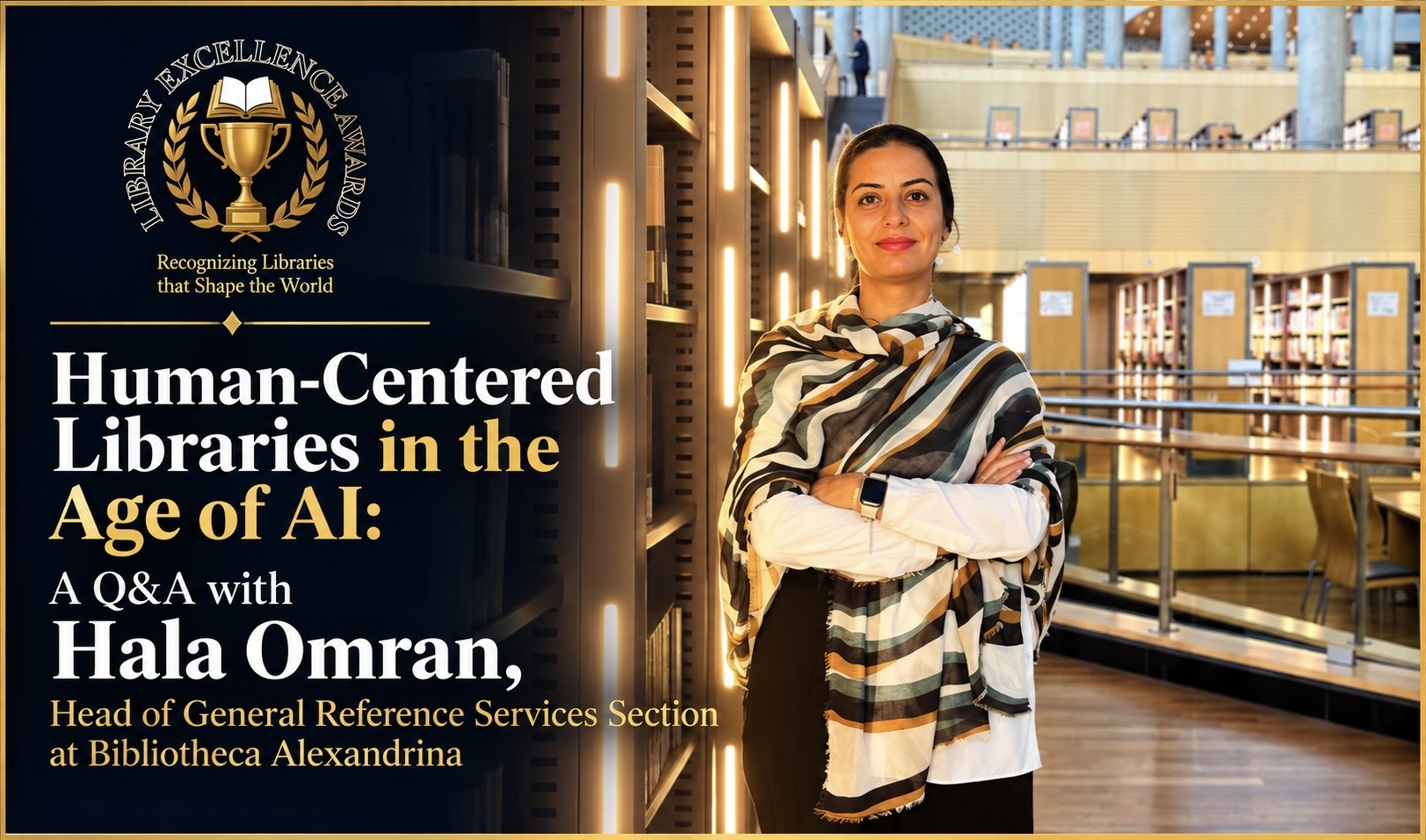
Human-Centered Libraries in the Age of AI: A Q&A with Hala Omran, Head of General Reference Services Section at Bibliotheca Alexandrina
Journalist & Publisher: Dr. Mahmoud Mansi
“Understanding
what elder users and young people are interested in and giving them
opportunities to create, participate, collaborate, and express themselves can
transform the library from a place they visit into a community they feel they
belong to.”
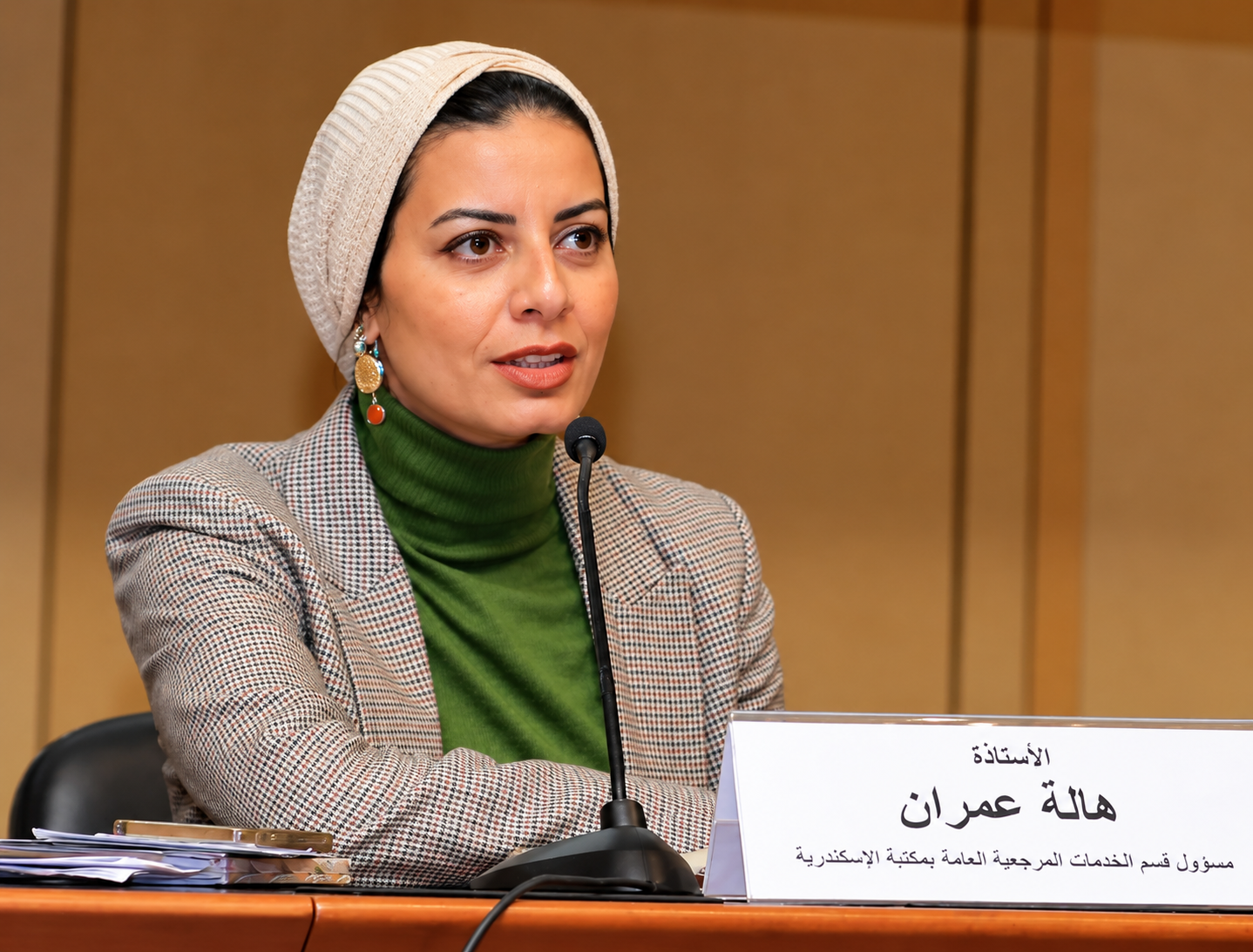
Hala Omran’s journey into librarianship began from an unexpected direction. After graduating with Excellence and Honor in Tourism Guiding from Alexandria University, she joined the Bibliotheca Alexandrina in 2006 as a trainee reference librarian and later pursued specialized studies in library science in France. What began as an interest in history, culture and research evolved into a career dedicated to connecting people with knowledge.
Today, as Head of the General Reference Services Section, Hala’s work spans reference services, information literacy, digital tools, cultural programming and community engagement. Her philosophy is distinctly human-centered: technology should make knowledge more accessible, but librarians remain essential for the judgment, empathy and expertise they bring to the experience.
In this exclusive Library Excellence Awards (LEA) conversation, Hala explores AI and the future of reference services, Gen Z volunteers, community engagement, leadership, travel, library excellence, and her vision of the public library of 2035.
LEA: In 2005, you earned your Bachelor’s degree in Tourism Guiding from Alexandria University with Excellence and Honor, ranking second in your class. You then chose a career in librarianship at one of the world’s most inspiring and iconic libraries. What made you choose this path?
Hala Omran: My academic background in Tourism Guiding gave me a strong foundation in history, archaeology, culture, heritage, communication, and working with people. After graduating, I was appointed as an instructor at the Faculty of Tourism and Hotels at Alexandria University, but I was also interested in finding a career where I could combine my passion for knowledge, culture, research, and public service.
My journey at the Bibliotheca Alexandrina began as a trainee reference librarian for the History section in 2006, and I gradually discovered how meaningful librarianship could be. To build a solid theoretical foundation in the field, I earned a certificate in library science from CNED (Centre national d'enseignement à distance) in Rouen, France, during the 2007/2008 academic year.
Reference work gave me the opportunity to help people find information, conduct research, discover new resources, and connect with knowledge. Over the years, this evolved into a broader passion for cultural programming, information literacy, community engagement, and innovation in library services.
For me, the library became more than a workplace. It became a space where knowledge, culture, technology, and people meet—and that is what continues to inspire me.
LEA: As Head of the General Reference Services Section at Bibliotheca Alexandrina, you interact closely with library users every day. In general, how has the role of reference services evolved over the past decade, and what do today’s users expect from modern librarians that they did not expect before?
Hala Omran: Reference services have evolved significantly from simply helping users locate books or answer specific questions. Today, librarians are expected to be research partners, educators, digital guides, and facilitators of discovery.
Users have access to an enormous amount of information, but access does not necessarily mean that they can identify reliable information, evaluate sources, or use information effectively. This has made information literacy an increasingly important part of our role.
At the Bibliotheca Alexandrina, we have worked to make our services more accessible and user-centered through digital tools, online reference services, information literacy programs, and improved wayfinding solutions. For example, our work on the Callima Website allows users to submit their inquiries digitally, while our e-reference services and information literacy programs help them become more independent in navigating information resources.
I believe that today’s users expect librarians not only to provide answers, but also to help them understand how to find, evaluate, and use information independently.
LEA: Artificial Intelligence is rapidly changing how people search for information. Rather than replacing reference librarians, how do you believe AI can empower librarians to provide more personalized, reliable, and meaningful research support?
Hala Omran: I see AI as a tool that enhances the librarian's role rather than replacing it. Technology helps us manage information more efficiently, identify patterns, support discovery, and give users faster access to resources — all of which improve the overall library experience. Yet the human element remains essential.
A librarian brings critical thinking, professional judgment, deep knowledge of information sources, and an understanding of each user's specific needs. These qualities are especially vital when evaluating the reliability of information generated or retrieved through digital tools.
At the Bibliotheca Alexandrina, we have already explored digital solutions such as electronic reference services and interactive tools, and we are currently building a chatbot application in collaboration with our ICT Department. These experiences have reinforced my belief that technology is most valuable when designed around the user's needs.
The future, in my view, is not about choosing between librarians and AI. It is about combining the strengths of both: the speed and analytical power of technology with the judgment, empathy, and professional expertise of librarians.
LEA: You have progressed from a trainee reference librarian to leading a team of reference librarians. Looking back at this journey, which experiences have shaped you most as a leader?
Hala Omran: My journey has been shaped by the range of roles and challenges I have encountered throughout my career. Starting as a trainee gave me a valuable understanding of the day-to-day needs of both users and staff. Later, working in specialized areas — including History and Geography, and Arts and Humanities Reference Services — deepened my appreciation for how diverse library services contribute to the overall user experience.
Managing cultural projects taught me that successful leadership depends on collaboration. Many of these projects involved colleagues from different departments, external organizations, cultural institutions, volunteers, and community groups — each bringing a unique perspective and set of strengths.
Today, as a leader, I strive to create an environment where team members feel empowered to contribute ideas, develop their skills, and take ownership of their work. I believe that effective leadership is not simply about managing people; it is about developing people and creating the conditions in which they can succeed.
LEA: One of today’s biggest challenges is encouraging people to actually use libraries despite having unlimited information available online. In your opinion, how can libraries better market themselves, attract new audiences, and remain relevant—especially among younger generations?
Hala Omran: Libraries need to move beyond the idea that their role is simply to provide books and physical spaces. They need to communicate the experiences, opportunities, and communities they can offer.One effective approach is to take the library beyond its walls and engage people through cultural events, partnerships, digital platforms, reading initiatives, workshops, and community programs. Our experience with projects such as the Big Read, the cultural walking tours and the Alexandria Heritage Awareness demonstrated that when libraries connect with people’s interests and communities, they can attract audiences who may not traditionally visit library premises.
Digital communication is equally important. Social media, online services, and digital engagement platforms allow libraries to reach users where they already spend their time.
Most importantly, libraries need to listen to their users. Understanding what elder users and young people are interested in and giving them opportunities to create, participate, collaborate, and express themselves can transform the library from a place they visit into a community they feel they belong to.
LEA: You work with a lot of volunteers, from selection to onboarding, to developing them and giving them a rich experience during their programs or internship period. Can you give us an interesting brief of Generation Z as library volunteers and their perception towards libraries?
Hala Omran: Generation Z views information through a digital-first, highly interactive lens. When working with Gen Z volunteers and interns, our goal is to offer purpose driven-work rather than just routine tasks, showing them how their efforts impact the community.
Involving them in cultural events, research support, and literacy initiatives shifts their view of libraries from traditional archives to modern, tech-forward cultural centers. It is a mutually rewarding relationship: they bring fresh energy and innovation, and we provide mentorship, practical experience, and professional growth.
LEA: The Library Excellence Awards (LEA) celebrates innovation, leadership, and excellence across the global library ecosystem. From your perspective, why is it important to recognize outstanding libraries and librarians internationally, and what advice would you give to institutions aspiring to become future award winners?
Hala Omran: Recognition is important because it gives visibility to the innovative work being done in libraries and helps share successful practices across countries and cultures. Libraries often make a significant impact on their communities without necessarily receiving the recognition they deserve.
International awards can also create opportunities for knowledge exchange. When institutions learn from one another, they can adapt successful ideas to their own communities rather than working in isolation.
My advice to institutions aspiring to excellence would be to focus first on impact rather than awards. Understand your users, identify their needs, experiment with new approaches, measure the results, and continuously improve.
Innovation does not always mean introducing sophisticated technology. Sometimes, it means finding a simple and effective way to make a service more accessible, empowering users to become more independent, or reaching a community that has previously been underserved.
LEA: Throughout your career, you have combined leadership, customer experience, information literacy, and community engagement. What continues to inspire you every day, and how do you hope your work ultimately changes people’s lives through libraries?
Hala Omran: What inspires me most is seeing the direct impact that libraries can have on people. A successful reference interaction may help a student complete an assignment, a researcher discovers an important source, or a visitor discover a new area of knowledge. A reading program may introduce someone to a new perspective or encourage them to read for the first time.
I am particularly inspired by the idea of empowering users. One of our achievements in Reference Services was reducing the number of users seeking assistance at the reference desk by helping them navigate the library more independently. To me, this is not a reduction in the importance of librarians; it is evidence that we are successfully teaching users how to become more confident and independent information seekers.
Ultimately, I hope my work contributes to making libraries more accessible, more inclusive, and more connected to people’s everyday lives.
LEA: As an enthusiastic traveler and explorer, how does visiting different places, cultures, and peoples help you grow? Is it similar to or different from reading books and traveling through pages?
Hala Omran: Travel and reading offer two different but complementary ways of discovering the world. Books allow us to enter other people’s experiences, histories, ideas, and cultures through the imagination. Travel gives us the opportunity to encounter those differences directly through places, people, food, languages, and everyday experiences.Both require curiosity and an openness to learning. They also remind us that there is rarely only one way of understanding the world.
My professional experience has also taught me the value of cultural exchange. Working with international organizations and participating in international library events has allowed me to encounter different perspectives and approaches to libraries and cultural institutions. I believe these experiences continuously broaden the way we understand our own communities as well.
LEA: Across your multiple travels, have you had the chance to visit other libraries? Which ones have captivated your mind and heart, and why?
Hala Omran: My professional travels have given me opportunities to encounter international library communities and gain and exchange ideas about the role of libraries as cultural and knowledge institutions, especially in France, England and Portugal.
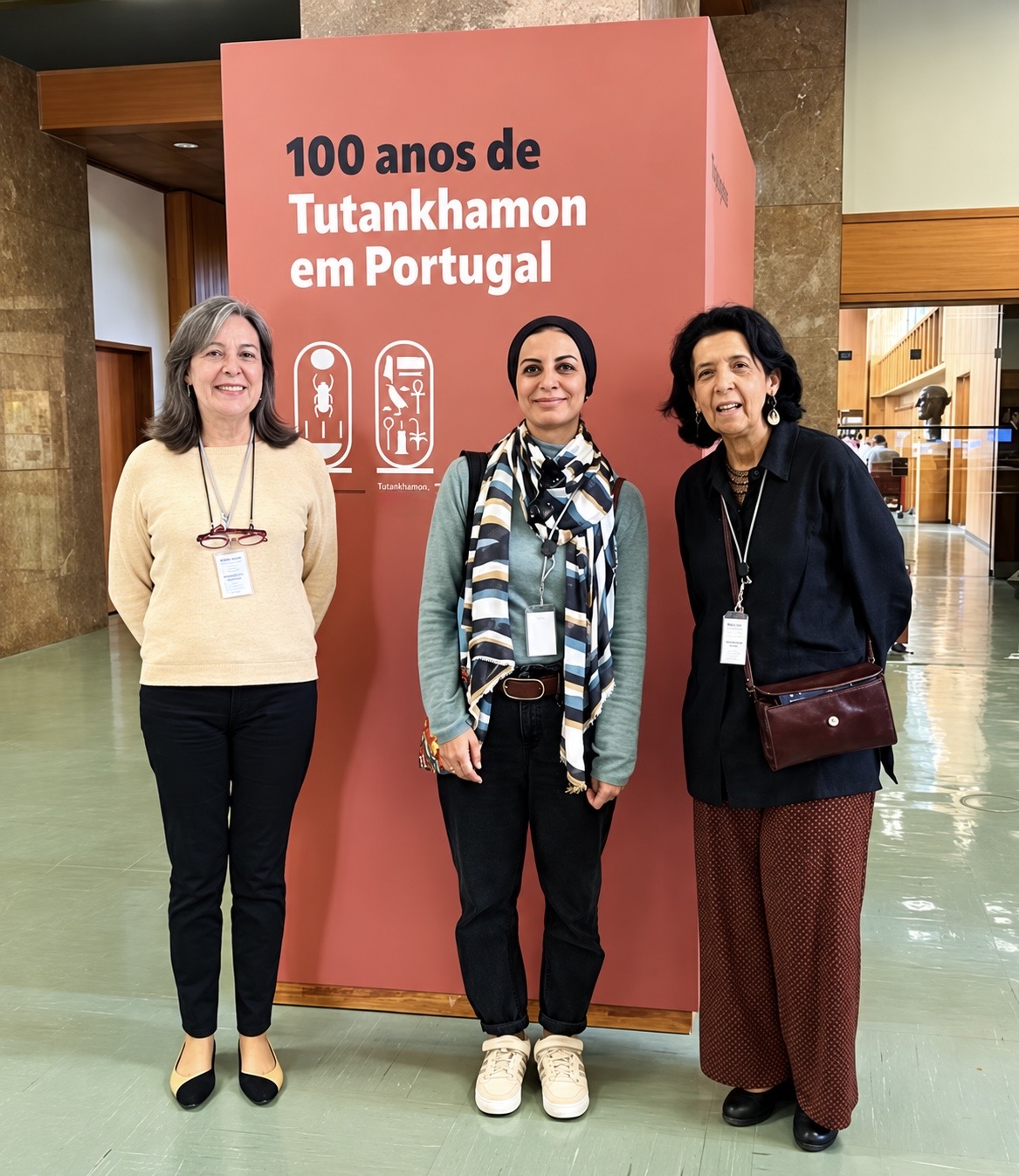
One particularly memorable experience was representing the Bibliotheca Alexandrina at the international conference “Iconic Libraries in World History” in Coimbra, Portugal, in 2022. The conference brought together representatives and directors from several iconic libraries, including the General Library of the University of Coimbra, the Abbey Library of Saint Gall (Switzerland), the Royal Portuguese Reading Cabinet, the General Historical Library of the University of Salamanca (Spain), and the Old Library at Trinity College Dublin.
What fascinated me most was seeing how different libraries preserve their unique historical identities while continuing to serve contemporary communities. It reinforced my belief that libraries can simultaneously act as guardians of heritage and platforms for innovation.
However, the library that truly captivated my heart and mind was the Bibliothèque Francophone Multimedia (BFM) in Limoges, France. I was deeply moved by how seamlessly it served its community through modern technology. I still vividly remember meeting the library director back in 2012; he shared the blueprints for their new building and outlined their ambitious plan to integrate QR codes for every single book—a forward-thinking vision at the time.
LEA: Imagine you are given the opportunity to redesign the public library experience for 2035 with no financial or technological limitations. What would that library look like, and what role should it play in shaping more informed, inclusive, and empowered communities?
Hala Omran: In 2035, with unlimited technological and financial resources, my dream is not to build a futuristic museum of tech, but an unapologetically human sanctuary.
I envision the 2035 library as an ambient, boundaryless ecosystem where physical walls and remote spaces blur through invisible, hyper-accessible technology. It is a place where translation is instant, physical and cognitive barriers vanish, and knowledge meets every user where they are—regardless of age, background, or ability.
In an era overflowing with synthetic information and algorithmic noise, the library’s job is no longer just giving people answers; it is teaching them how to ask the right questions. The library of 2035 must evolve from a storehouse of facts into a forge for critical thinking, civic trust, and human empathy. It stands as the ultimate proof that no matter how fast technology advances, human connection and wisdom remain irreplaceable.
Thank You 😊
Library Excellence Awards
Celebrating the people, institutions, and ideas shaping the future of libraries, books, and knowledge.